


Bed Bug Control Tips for Busy Commercial Office Spaces Today
Explore practical bed bug control tips for busy offices, including staff training, reporting, inspections, careful treatment scheduling, and monitoring.
Bed bugs can enter an office on employee clothing, visitor bags, delivered items, or used furniture. However, busy schedules, shared workspaces, and connected offices can complicate a response. Managers must identify evidence without causing panic or unnecessarily interrupting operations.
A practical bed bug control plan combines employee awareness, consistent reporting, professional inspections, carefully scheduled treatment, and continued monitoring across affected and adjoining workspaces.

Tip #1: Train Employees to Recognize Bed Bug Evidence
Employees cannot report evidence they do not recognize. Therefore, managers should explain what bed bugs look like and what their common traces look like. Adults have flat, oval, reddish-brown bodies, while younger nymphs appear smaller and paler. Other physical evidence includes:
- Tiny white eggs
- Translucent shed skins
- Dark fecal spots
- Rust-colored bloodstains
- Live insects around upholstered furniture
Staff should understand that bites cannot confirm workplace activity. Fleas, mosquitoes, allergies, and several skin conditions can create similar reactions.
Ask employees to photograph suspicious evidence or preserve a specimen inside a sealed container. They should report the location immediately rather than move furniture or spray consumer pesticides. Brief, factual training gives the bed bug control team more accurate information while reducing rumors and unnecessary alarms.

Tip #2: Create a Central Bed Bug Control Reporting Process
A central reporting process prevents details from becoming scattered across emails, conversations, and departments. Designate one facilities manager, property representative, or human resources contact to receive reports.
Each report should include:
- Date and time
- Exact office location
- Description of the evidence
- Photographs
- Furniture involved
- Recent movement of items
- Related visitor or customer reports
The designated contact can then give the specimen to a professional for identification.
Managers should protect employee confidentiality, particularly when someone is concerned about bringing bed bugs home. Blame discourages reporting and delays bed bug control. Instead, record facts consistently and share details only with people responsible for inspection, treatment, or workplace safety. Organized records help professionals identify patterns across departments.
Tip #3: Inspect High-Risk Office Areas Promptly
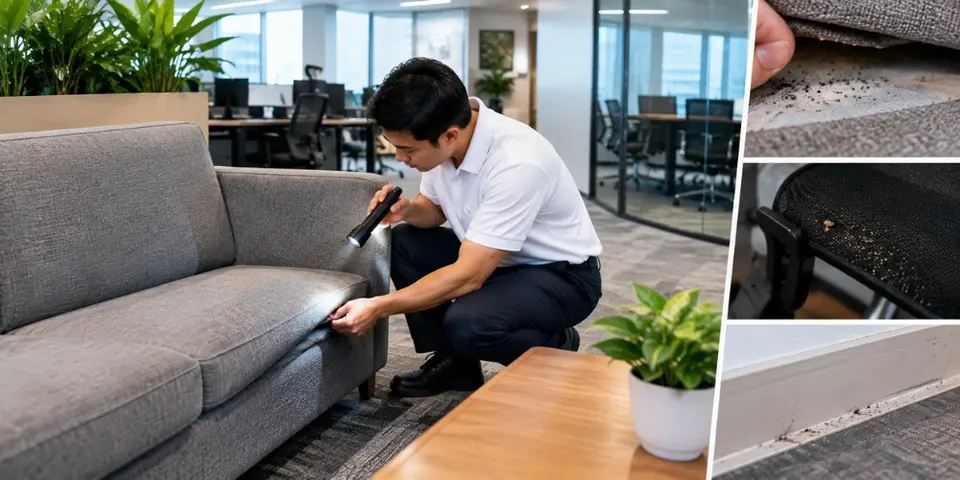
A professional should begin near the reported location and expand the inspection according to the evidence. In offices, bed bugs often remain near places where people sit for extended periods. Technicians may examine:
- Reception couches
- Upholstered desk chairs
- Conference room seating
- Break rooms and lounges
- Wellness or nursing rooms
- Coat closets and lockers
- Shared furniture
- Baseboards and wall gaps
The inspection should cover offices beside the reported area, especially in multi-tenant buildings.
Professionals search for live adults, nymphs, eggs, casings, fecal spots, and bloodstains. They also distinguish bed bugs from similar-looking pests before recommending service. Prompt inspection allows bed bug control to focus on confirmed and likely hiding places. It also prevents managers from closing sections of the office based on an unverified report.
Tip #4: Keep Furniture and Personal Items in Place
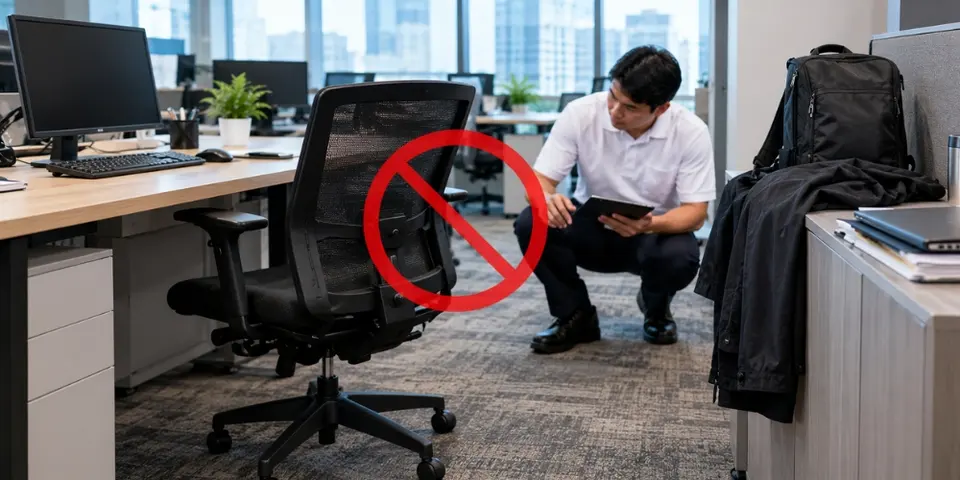
Moving a suspicious chair or couch may seem helpful, but it can spread insects. Bed bugs can fall into hallways, elevators, vehicles, or other departments during furniture transport by staff.
Employees should leave furniture in place until a professional provides instructions. They should not relocate bags, coats, files, or personal items from the reported workspace.
Managers should prevent employees from spraying store-bought pesticides. Random applications may push bed bugs deeper into furniture or adjoining spaces and interfere with professional products. Instead, follow the preparation checklist supplied by the pest company. It may cover clutter reduction, furniture access, sensitive equipment, and employee belongings.
Keeping the area stable preserves evidence and helps bed bug control professionals map the infestation accurately before treatment begins.

Tip #5: Schedule Bed Bug Control Around Office Operations
An effective plan should address the infestation while limiting avoidable business disruption. The provider should explain which rooms require temporary closure and when people may return.
Treatment options may include whole-room heat, conventional applications, or a customized combination. The inspection findings, office layout, infestation level, and available preparation time should guide the choice. Heat may provide broader, faster coverage, while conventional service may target limited areas over several visits.
Before the appointment, managers should coordinate furniture preparation, employee access, and protection for electronics, documents, medicines, or heat-sensitive materials. They should communicate with the landlord or neighboring tenants when shared spaces may require inspection.
Clear scheduling allows bed bug control to proceed safely without creating confusion. Written re-entry instructions help managers reopen each treated workspace at the appropriate time.

Tip #6: Monitor Treated and Adjoining Workspaces
Treatment addresses confirmed activity, but monitoring helps reveal surviving or newly introduced insects. Professionals may place monitoring devices near upholstered furniture, walls, or other likely travel routes. Follow-up inspections allow technicians to evaluate results and adjust the plan when necessary.
Managers should continue documenting:
- New insect sightings
- Fresh fecal spots
- Additional employee reports
- Activity in nearby offices
- Changes around shared furniture
- Dates of inspections and treatments
Adjoining workspaces deserve attention because people and movable objects connect different areas. Property managers should coordinate access when several tenants share a floor, lobby, conference center, or break area.
Businesses can reduce future risks by inspecting used furniture before bringing it inside and discouraging unapproved furniture transfers. Employees should keep using the central reporting process after service. Continued communication supports bed bug control without asking staff to diagnose the infestation themselves. Professionals should make the final identification and recommend any additional action.

Keep Bed Bugs From Joining the Office Team
Employee awareness, prompt reporting, professional identification, careful scheduling, and follow-up monitoring create an organized response. Managers should communicate calmly, protect privacy, and avoid blaming anyone for the introduction of the insects. Consistent records also help the provider connect recurring evidence with rooms, furnishings, or shared spaces.
Businesses can review professional options for difficult bed bug activity before arranging an inspection. A customized bed bug control plan protects employees and operations by addressing verified activity without unnecessary closures across the entire workplace.
References:
- Doggett, S. L., Dwyer, D. E., Peñas, P. F., & Russell, R. C. (2012). Bed bugs: clinical relevance and control options. Clinical Microbiology Reviews, 25(1), 164–192. https://doi.org/10.1128/cmr.05015-11
- Hentley, W. T., Webster, B., Evison, S. E. F., & Siva-Jothy, M. T. (2017). Bed bug aggregation on dirty laundry: a mechanism for passive dispersal. Scientific Reports, 7(1), 11668. https://doi.org/10.1038/s41598-017-11850-5