


Bed Bug Heat Treatment FAQs: Does It Kill Other Pests?
Heat treatment kills more than bed bugs. Learn exact temperatures that eliminate flea and other pests, and what to expect from a whole-home treatment.
If you are planning a bed bug heat treatment, you may wonder whether it can solve more than a bed bug problem. Many homeowners discover fleas, cockroaches, mites, or other pests at the same time.
In many cases, the answer is yes. Bed bug heat treatment raises temperatures throughout the home, affecting heat-sensitive pests hidden in furniture, carpets, wall voids, mattresses, and other difficult areas. Results depend on the pest and how thoroughly technicians heat the structure. This guide explains which pests the process may eliminate and where its limitations begin.
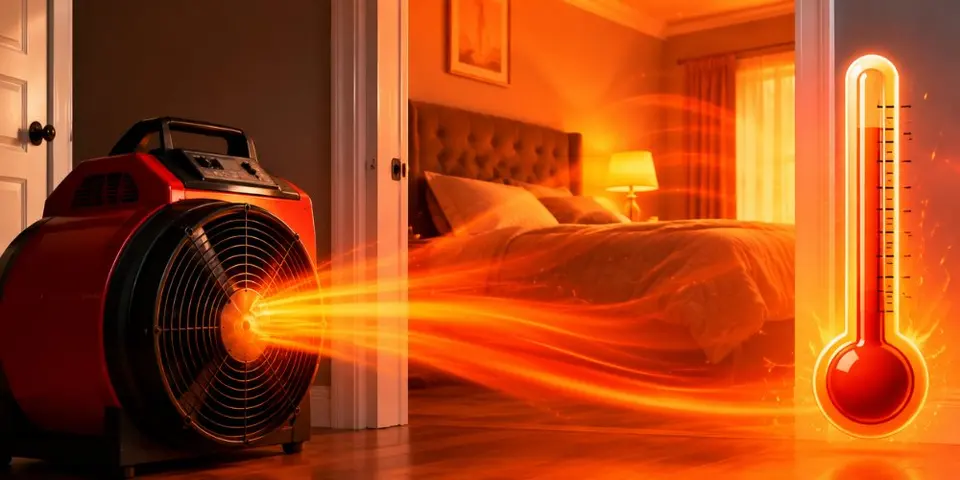
FAQ 1: What Temperature Does Professional Heat Treatment Reach?
Professional whole structure heat treatment usually raises indoor temperatures to between 120°F and 135°F. Technicians maintain this range for several hours to expose insects to lethal heat. Reaching the target temperature in the middle of a room is not enough. The heat must also enter carpet fibers, wall voids, mattress interiors, furniture cushions, closets, cracks, and other places where pests hide.
This coverage distinguishes professional service from the use of a thermostat or portable heaters. Technicians use industrial equipment to circulate heat and install sensors in critical areas to verify that hidden spaces maintain the required temperature.
Bed bugs die when exposed to sufficient heat for enough time. When professionals maintain temperatures between 120°F and 135°F for hours, the process targets adults, young bed bugs, and eggs. This range can also exceed the survival limits of other household pests.
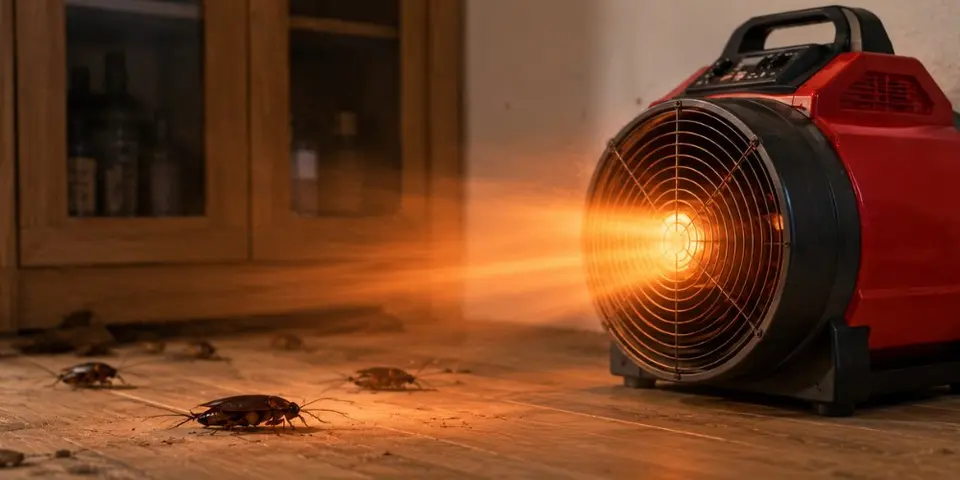
FAQ 2: Does Heat Treatment Kill Cockroaches?
Yes, professional heat can kill cockroaches, including German cockroaches and American cockroaches commonly found in homes. Sustained temperatures above approximately 120°F can be lethal when the insects cannot escape the treated area.
Cockroach egg cases require special attention because they may provide insulation against short periods of heat. Proper airflow and sufficient exposure are essential. Professional equipment circulates heated air into hiding places long enough to affect protected areas.
Cockroaches gather behind appliances, beneath cabinets, inside cracks, and within wall voids. Whole structure heating can penetrate many of these spaces. Still, homeowners may need sanitation, entry-point sealing, or follow-up service when cockroaches enter from outside or from a connected property.
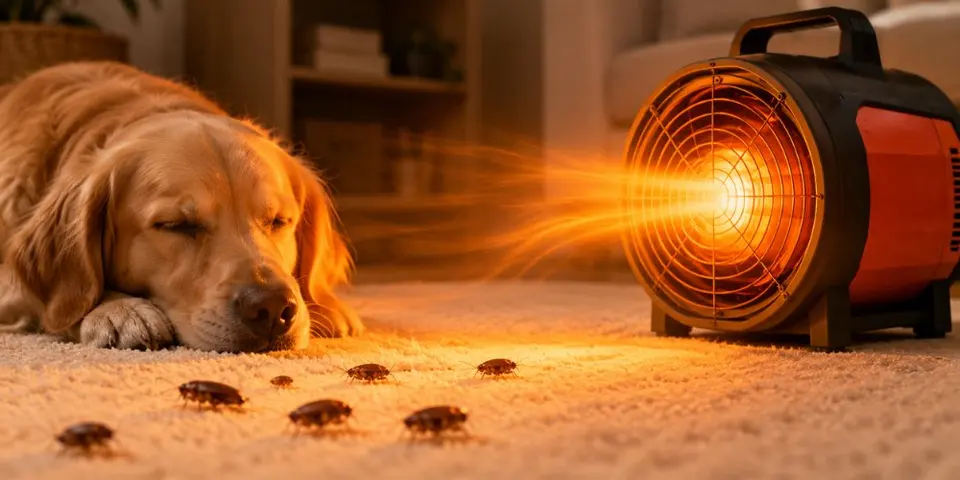
FAQ 3: Does Heat Treatment Kill Fleas?
Yes. Fleas are generally more sensitive to heat than bed bugs. Adult fleas, larvae, and eggs begin dying at temperatures below those used during professional service. Therefore, temperatures between 120°F and 135°F provide a substantial margin above the level needed to affect fleas.
This makes bed bug heat treatment useful in homes facing both pests. Fleas can enter on pets, clothing, used furniture, or wildlife. Treatment can reach carpets, upholstery, pet resting areas, floor gaps, and other hiding places.
Treating the structure does not protect pets from future exposure to fleas. Pets may require veterinary care, while yards may need separate attention. Without these steps, fleas can return.

FAQ 4: Does Heat Treatment Kill Dust Mites and Other Mites?
Sustained high temperatures can kill dust mites in mattresses, upholstered furniture, carpets, curtains, and similar materials. Because professional heating reaches approximately 130°F in many treated areas, it can substantially reduce or eliminate mites directly exposed to the heat.
Scabies mites require a different approach because they live on human skin rather than establishing a typical household infestation. Heating bedding, clothing, towels, and other washable items can help with a complete response, but people with suspected scabies should seek appropriate medical guidance. Treating the home alone does not replace care for the affected person.
Other mite species vary in their behavior and heat tolerance. Correct identification matters because some mites originate from birds, rodents, stored products, or outdoor sources. Removing the source may be necessary even if indoor heat kills mites present during service.
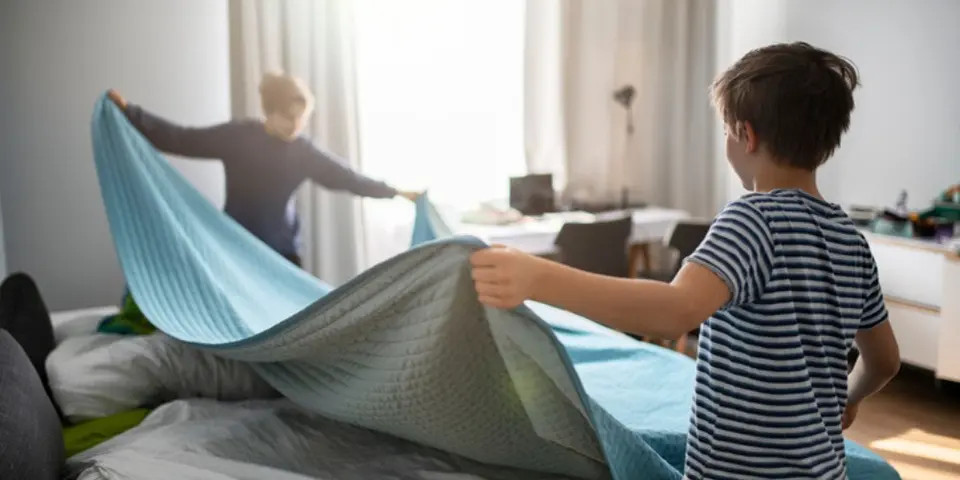
FAQ 5: Why Is Preparation Important?
Preparation allows heated air to move through the home and reach hidden pests. Clutter, tightly packed belongings, and blocked airflow can create cooler pockets that reduce effectiveness. Homeowners should follow the preparation checklist supplied by their pest control professional.
Instructions may include moving furniture away from walls, opening closets and drawers, handling sensitive electronics, removing pressurized containers, and taking plants, pets, medications, and heat-sensitive items off the property. Residents should never guess which belongings can remain. Following the exact checklist protects personal items and helps technicians maintain consistent temperatures throughout every treatment area.

FAQ 6: What Does Heat Treatment Not Reliably Eliminate?
Although professional heating can affect several indoor pests, it is not a complete answer for every infestation.
Outdoor pests remain a concern because the service affects only insects inside the treated structure. Heavy cockroach activity around the exterior may require sanitation, sealing, baiting, or an outdoor pest management plan.
Reinfestation is also possible. Heat eliminates pests present and exposed during service, but it leaves no lasting residue. Cockroaches can return through shared walls, and pets can introduce new fleas. Preventive action after treatment remains important.
Structural pests require separate evaluation. Termites living inside structural wood present different challenges. Although specialized heat methods may control termites in certain situations, standard bed bug heat treatment is not automatically a termite service. A professional inspection can identify the pest and determine the correct protocol.

What Homeowners Should Remember
Bed bug heat treatment does more than target bed bugs and their eggs. When technicians maintain lethal temperatures throughout the home, the process may also eliminate fleas, cockroaches, dust mites, and other heat-sensitive pests that hide in hard-to-reach areas.
However, heat provides no residual protection and cannot prevent pests from returning. Professional bed bug exterminators can identify the pests present, determine whether heat treatment is appropriate, and recommend follow-up measures to ensure longer-lasting protection against new or recurring pest activity.
References:
- Pereira, R. M., Koehler, P. G., Pfiester, M., & Walker, W. (2009). Lethal effects of heat and use of localized heat treatment for control of bed bug infestations. Journal of Economic Entomology, 102(3), 1182–1188. https://doi.org/10.1603/029.102.0342
- Silverman, J., Rust, M. K., & Reierson, D. A. (1981). Influence of temperature and humidity on survival and development of the cat flea, Ctenocephalides felis (Siphonaptera: pulicidae). Journal of Medical Entomology, 18(1), 78–83. https://doi.org/10.1093/jmedent/18.1.78