


Bed Bug Heat Treatment Questions Tulsa Homeowners Ask
Read through these FAQs to prepare for bed bug heat treatment. Learn what to wash, move, and protect so your Tulsa-area service goes smoothly.
Discovering bed bugs in your home can feel overwhelming, especially when you start thinking about the preparations. Fortunately, preparing for bed bug heat treatment is usually much simpler than many homeowners expect.
The goal is to help technicians access areas where bed bugs commonly hide while ensuring heat circulates properly throughout the home. With proper preparation, bed bug heat treatment can operate more efficiently and help reduce service delays.
If you live in the Tulsa metro area, these frequently asked questions will help you understand what to expect before, during, and after bed bug heat treatment.
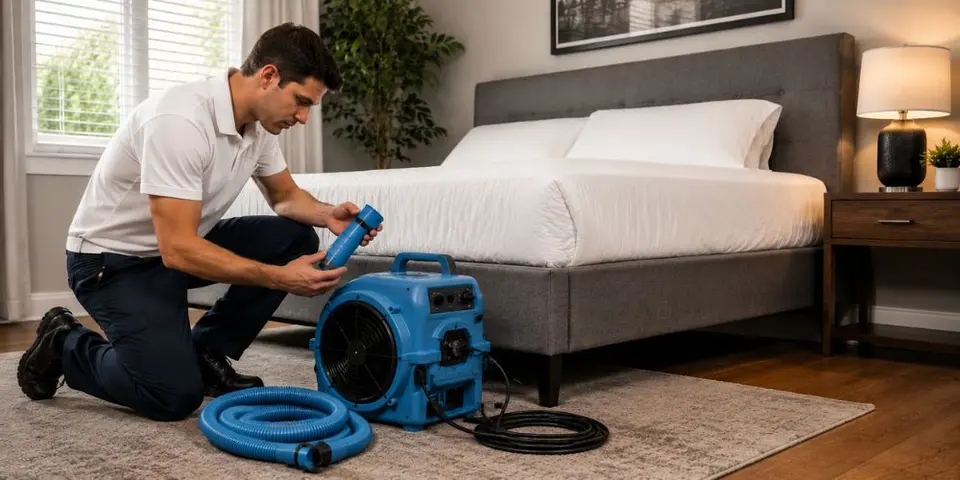
FAQ: How Does Bed Bug Heat Treatment Work?
Bed bug heat treatment works by raising indoor temperatures to levels that eliminate bed bugs and their eggs. Unlike some traditional treatment methods, heat penetrates cracks, furniture, mattresses, and other hard-to-reach areas where bed bugs often hide.
During the process, technicians place specialized heating equipment and monitoring devices throughout the property. They carefully monitor temperatures to ensure heat spreads evenly across treatment areas.
Bed bugs commonly hide in:
- Mattresses and box springs
- Upholstered furniture
- Bed frames
- Baseboards
- Electrical outlets
- Curtains and fabric seams
- Cracks near sleeping areas
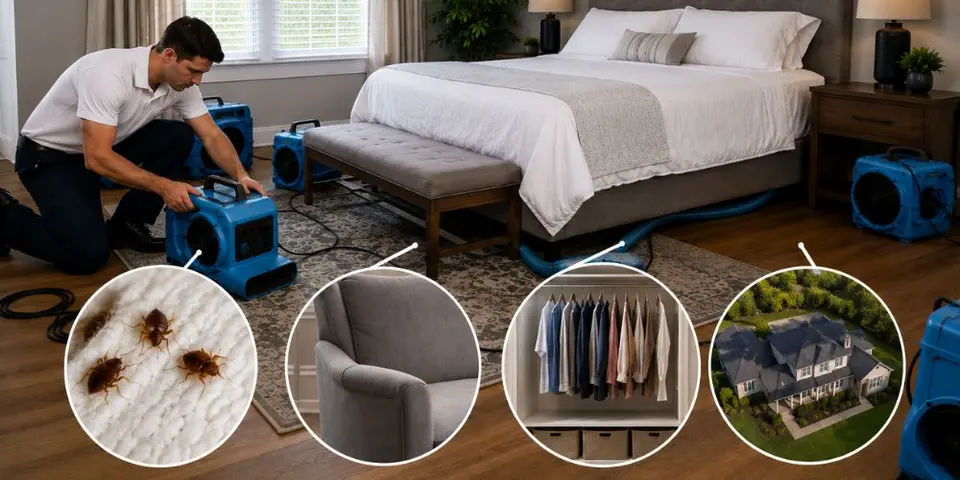
FAQ: How Long Does Bed Bug Heat Treatment Take?
Technicians could mostly finish the treatment within a single day. However, treatment time varies depending on several important factors.
The size of the property plays a major role in how long the process takes. A small apartment may require less time than a large multi-bedroom home. In addition, clutter levels can affect airflow and slow down heat circulation inside the structure.
Other factors that may influence treatment time include:
- Number of infested rooms
- Amount of furniture
- Accessibility of hiding areas
- Severity of infestation
- Layout of the property
After treatment is complete, technicians continue monitoring temperatures until the home cools safely. Once conditions stabilize, they will let you know when re-entry is safe.
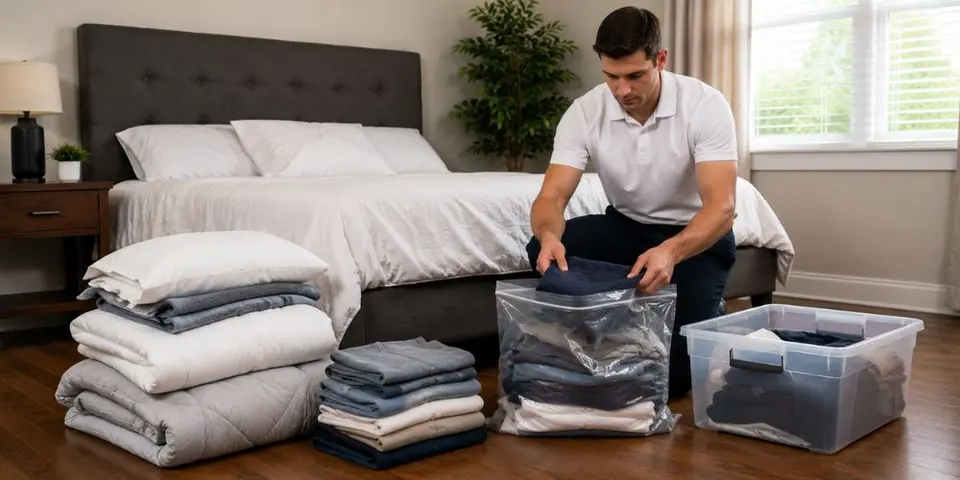
FAQ: Do I Need to Wash All My Clothes Before Bed Bug Heat Treatment?
No. Most homeowners do not need to wash every item they own before bed bug heat treatment. In many cases, providers only recommend laundering fabrics and clothing that are more likely to be exposed.
Focus primarily on:
- Bedding and sheets
- Pillowcases
- Blankets and comforters
- Recently worn clothing
- Laundry piles
- Clothing near sleeping areas
After washing and drying items, seal them inside clean plastic bags or bins until treatment day. This simple step helps prevent re-exposure before technicians complete the process.
At the same time, avoid excessive cleaning that creates unnecessary stress or delays. Instead, prioritize organization and accessibility. Technicians need clear access to walls, furniture, and sleeping areas so heat can circulate properly throughout the home.
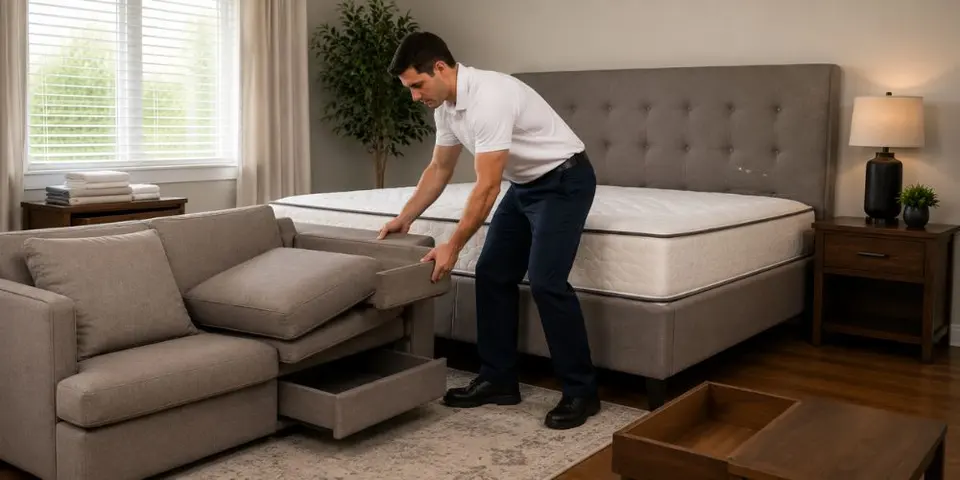
FAQ: What Should I Do With Mattresses, Pillows, and Furniture?
Most mattresses, pillows, and furniture remain inside the home during bed bug heat treatment. Since bed bugs often hide deep inside upholstered items and mattress seams, treating these areas directly is usually more effective than removing them.
Before treatment day, technicians may ask you to:
- Remove bedding from mattresses
- Separate cushions on couches
- Pull furniture slightly away from the walls
- Reduce clutter around sleeping areas
- Open drawers or storage compartments
In addition, moving furniture without proper precautions may accidentally spread bed bugs into hallways, vehicles, storage units, or neighboring rooms. Keeping items in place often helps contain the infestation more effectively.
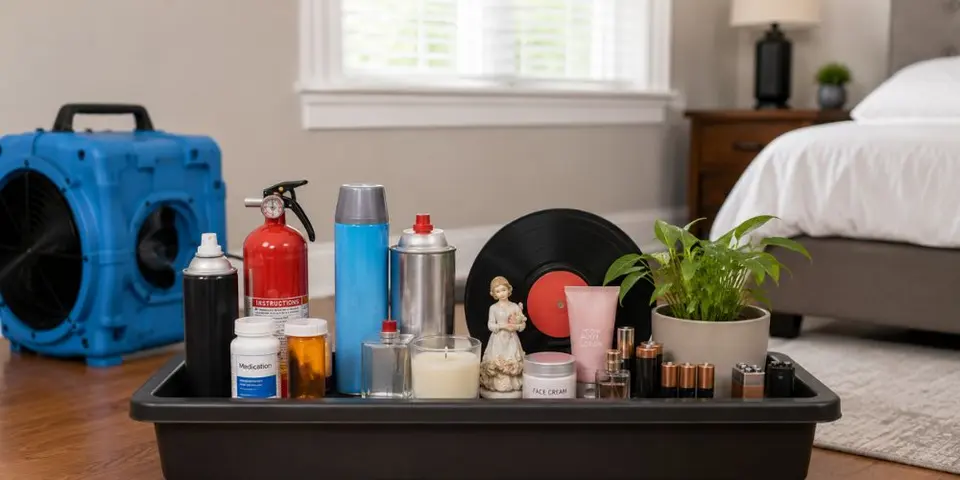
FAQ: What Items Cannot Stay Inside During Bed Bug Heat Treatment?
Although bed bug heat treatment safely treats most household belongings, certain heat-sensitive items should remain outside the treatment area.
These items may include:
- Aerosol cans
- Fire extinguishers
- Certain medications
- Pressurized containers
- Candles
- Vinyl records
- Some cosmetics
- Delicate collectibles
- Fresh plants
- Certain batteries
Instead of trying to decide on your own, create a small area for questionable belongings before treatment day. Your technician can review these items and explain what you should remove, protect, or leave in place.
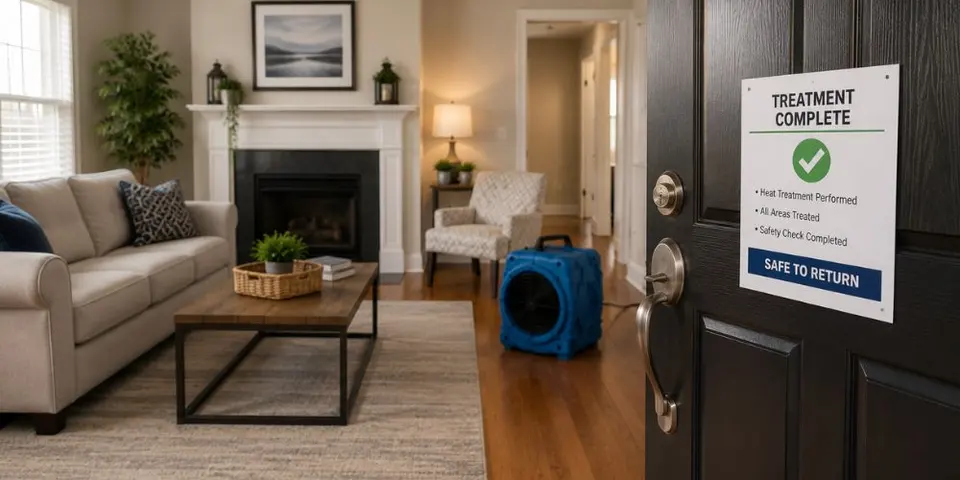
FAQ: When Can I Return Home After Bed Bug Heat Treatment?
Re-entry timing depends on how long the structure needs to cool after treatment. Most providers allow homeowners to return once indoor temperatures stabilize and technicians complete final safety checks.
Do not return home early unless your technician says it is safe.
After bed bug heat treatment, many homeowners notice immediate improvement. However, occasional sightings shortly after treatment do not necessarily indicate that the process failed.
For example, you may notice:
- Isolated dead bed bugs
- Slower-moving insects
- Activity in previously hidden areas
If you notice anything concerning after treatment:
- Take a photo if possible
- Avoid moving furniture between rooms
- Record where you found the insect
- Contact your provider promptly
Clear communication helps technicians determine whether additional follow-up or monitoring is necessary.
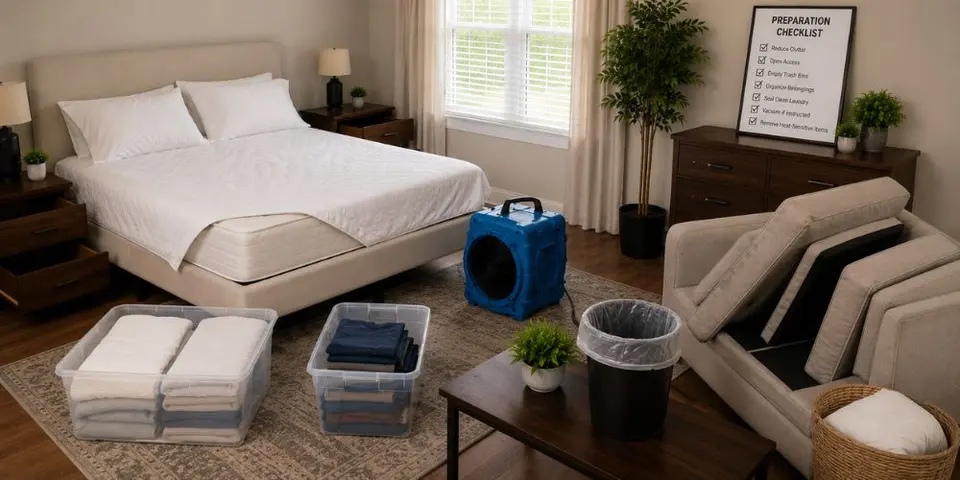
FAQ: How Can I Prepare More Effectively Before Treatment Day?
Simple preparation often makes bed bug heat treatment smoother and more efficient. Instead of panic cleaning, focus on creating clear access throughout the property.
Before technicians arrive, try to:
- Reduce clutter on floors
- Open access around beds and furniture
- Empty trash bins
- Organize loose belongings
- Keep clean laundry sealed
- Vacuum visible debris if instructed
- Remove heat-sensitive items
Most importantly, avoid last-minute furniture removal or unnecessary disposal of belongings. Organized preparation usually works better than rushed cleaning or moving large items around the property.
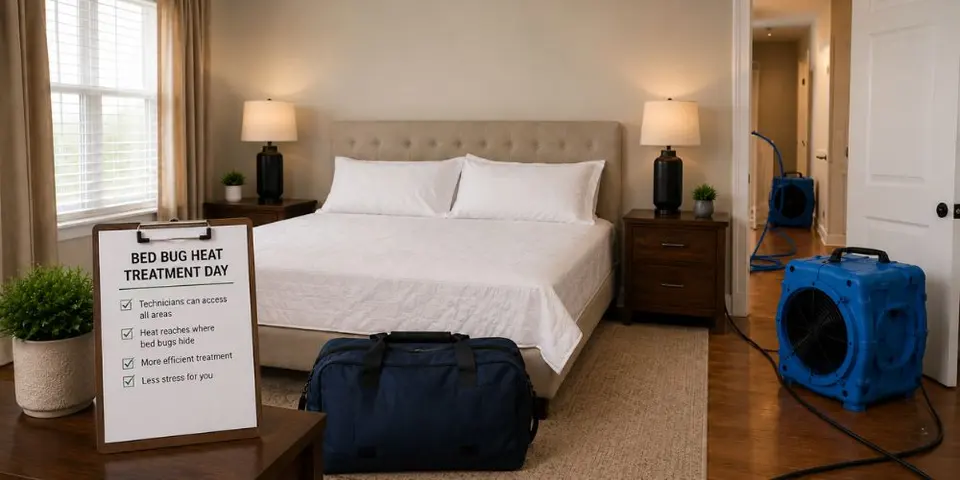
Make Bed Bug Heat Treatment Day Easier and Less Stressful
Bed bug heat treatment works best when technicians can fully access the areas where bed bugs hide most often. A calm, organized approach improves efficiency while reducing stress throughout the process.
If you live in the Tulsa metro area and need professional guidance before treatment day, a licensed bed bug specialist can explain each preparation step clearly and help you feel more confident about the process. For more information about inspections or scheduling, visit HeatTech Bed Bug Exterminator.
Reference:
Kells, S. A., & Goblirsch, M. J. (2011). Temperature and Time Requirements for Controlling Bed Bugs (Cimex lectularius) under Commercial Heat Treatment Conditions. Insects, 2(3), 412–422. https://doi.org/10.3390/insects2030412