


Bed Bug Signs Every Industrial Building Team Should Know
Learn which bed bug signs industrial teams should recognize early, from live insects and fecal spots to shed skins, eggs, bloodstains, and bite reports.
Bed bugs can reach industrial buildings on workers, visitors, clothing, bags, or infested furniture. However, large floor plans, rotating shifts, and shared employee areas can conceal activity. Spaces where people sit or rest for extended periods face the greatest risk.
When employees recognize bed bug signs and report them promptly, professionals can confirm the presence of the pest, inspect connected areas, and recommend an appropriate response before activity disrupts other departments.

Live Insects Are Definite Bed Bug Signs
A live insect provides the strongest evidence of current activity. Adult bed bugs have reddish-brown coloring and flat, oval bodies. Young nymphs look smaller and paler, which makes them difficult to notice against light fabric.
Employees may find bed bugs in places where coworkers, drivers, or visitors remain seated, including:
- Furniture seams and joints
- Upholstered break-room seating
- Locker-room benches
- Security station chairs
- Reception couches
- First-aid room furniture
Staff should photograph a suspected insect before disturbing the area. When possible, they should place it inside a sealed, transparent container for professional identification.
Employees must not carry the chair or couch through the facility. Movement can separate the insect from its hiding place and transfer activity elsewhere. A trained specialist can distinguish bed bugs from carpet beetles, spider beetles, cockroach nymphs, and other look-alikes.
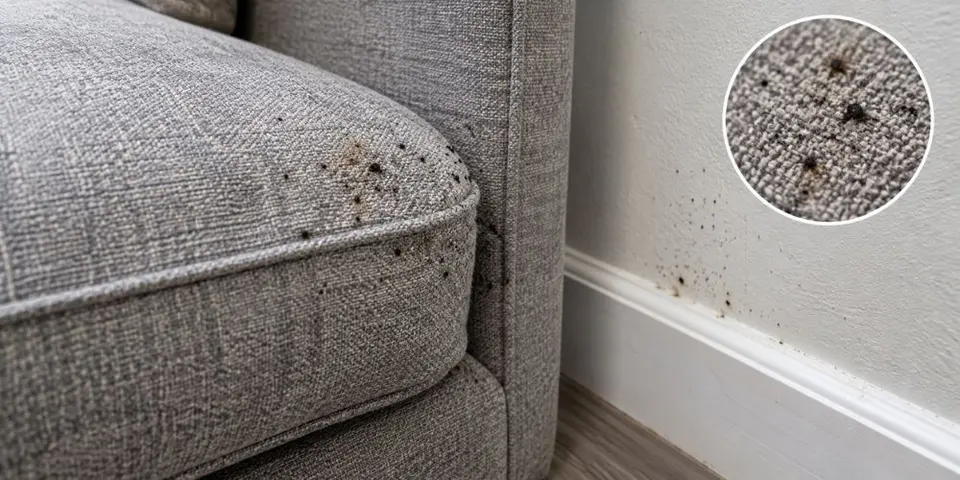
Dark Fecal Spots on Furniture and Walls
Bed bug fecal matter usually appears as black or dark brown dots. Since the waste contains digested blood, marks on porous fabrics may soak into the fibers and appear to be ink. On plastic, metal, or finished wood, the residue may remain slightly raised or smear when fresh.
Staff commonly discover these bed bug signs along chair seams, under cushions, around baseboards, or near narrow gaps in walls. Several dots in the same location may indicate a frequently used hiding place. However, the number of spots cannot provide an exact population estimate.
Industrial environments also contain grease, machine residue, dirt, mold, ink, and rust. Therefore, employees should not identify every dark mark as evidence of bed bugs. They should photograph the stain before cleaning it and check the surrounding area for live insects, eggs, or shed skins.
A professional can evaluate the mark’s appearance, surface, location, and nearby bed bug signs.
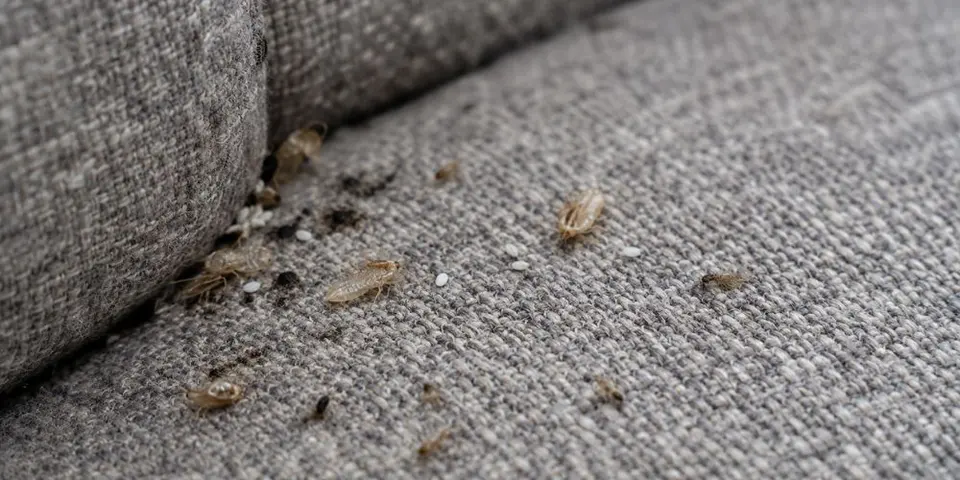
Shed Skins and Eggs Around Employee Areas
Young bed bugs pass through several developmental stages before adulthood. As they grow, they shed their outer coverings, leaving behind pale, translucent casings. An intact casing retains the insect’s oval body shape, legs, and segmented abdomen, but it appears dry and empty.
Casings of different sizes may indicate that several developmental stages occupied the area. Employees may discover these bed bug signs near:
- Locker corners and hinges
- Break-room couches
- Upholstered office chairs
- Furniture joints
- Changing-room benches
- Baseboards near employee lounges
Bed bug eggs provide another important clue. They appear tiny, white, and attached to protected surfaces.
A single casing indicates that a bed bug developed in that location at some point, but it cannot confirm the severity of the current infestation. Eggs, fresh fecal spots, or live nymphs nearby provide stronger evidence of ongoing reproduction. Staff should preserve suspicious material in a sealed container rather than sweeping it away. Professional identification can separate bed bug remains from lint, debris, and other insect casings.
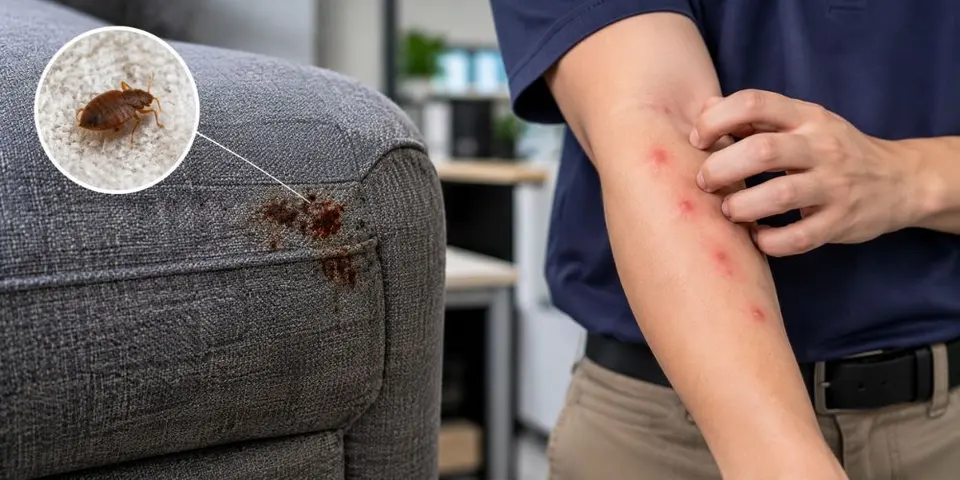
Bloodstains and Bite Complaints From Employees
Small rust-colored marks may appear when a recently fed bed bug becomes crushed against fabric. Employees might notice these stains on upholstered couches, bedding in the first-aid room, uniform-room benches, or chairs used during breaks. However, cuts, scratches, and ordinary workplace contact can also leave blood marks.
Bite complaints require similar caution. Some people develop red, itchy bumps soon after exposure, while others react several days later.
Fleas, mosquitoes, allergies, contact dermatitis, and other conditions can produce comparable symptoms. For this reason, bites alone do not confirm the presence of bed bugs. Managers should never diagnose a skin reaction or publicly identify an employee as the source.
Instead, they should record where and when the employee noticed the symptoms. Professionals can inspect furniture and surrounding areas for bed bug signs. Employees with severe swelling, breathing difficulty, or signs of infection should seek medical attention from a healthcare professional.

Recurring Bed Bug Signs Across Multiple Departments
One isolated insect may have recently entered the building, but repeated bed bug signs require a broader response. Reports from different shifts can reveal activity that daytime managers never observe. Likewise, evidence in adjoining rooms may indicate that bed bugs traveled with people, bags, or furniture that was relocated.
Facility managers should compare reports for patterns involving:
- Shared break-room furniture
- Lockers and coat storage
- Administrative offices
- Training rooms
- Driver waiting areas
- Furniture moved between departments
- Spaces used by several work shifts
Recurring bed bug signs do not automatically mean insects have spread throughout the entire industrial building. Professionals should begin with near-confirmed evidence and expand the inspection based on the findings. This focused approach avoids unnecessary closures while addressing connected areas that face credible risk.
Monitoring devices can help technicians detect low-level activity after treatment or in nearby spaces. Managers should continue recording sightings, locations, dates, affected furniture, and completed services. Consistent documentation helps the pest control provider distinguish treatment failure from a new introduction and adjust the response accordingly.

Keep Bed Bugs From Punching In for Another Shift
Employee education and confidential reporting give industrial facilities a stronger defense. Staff should photograph Sbed bug signs, preserve specimens, and leave suspicious furniture in place. Managers should also prevent random consumer pesticide applications, as they may interfere with professional treatments and unnecessarily expose workers.
A trained provider can confirm the pest, inspect connected areas, and develop a response around facility operations. Businesses seeking local help with persistent bed bug activity can arrange a professional evaluation. Continued monitoring and clear reporting responsibilities help prevent a limited discovery from becoming a facility-wide disruption.
References:
- Doggett, S. L., Dwyer, D. E., Peñas, P. F., & Russell, R. C. (2012). Bed bugs: clinical relevance and control options. Clinical Microbiology Reviews, 25(1), 164–192. https://doi.org/10.1128/cmr.05015-11
- Hentley, W. T., Webster, B., Evison, S. E. F., & Siva-Jothy, M. T. (2017). Bed bug aggregation on dirty laundry: a mechanism for passive dispersal. Scientific Reports, 7(1), 11668. https://doi.org/10.1038/s41598-017-11850-5